
Pitching & Public Writing With Michael Erard
Michael is a linguist and the author of "Escaping One's Own Shadow," an op-ed we use to help our clients become more aware writers. Here he reflects on decades of writing about language for the public — and on gathering it into a self-published collection, The Language Beat.
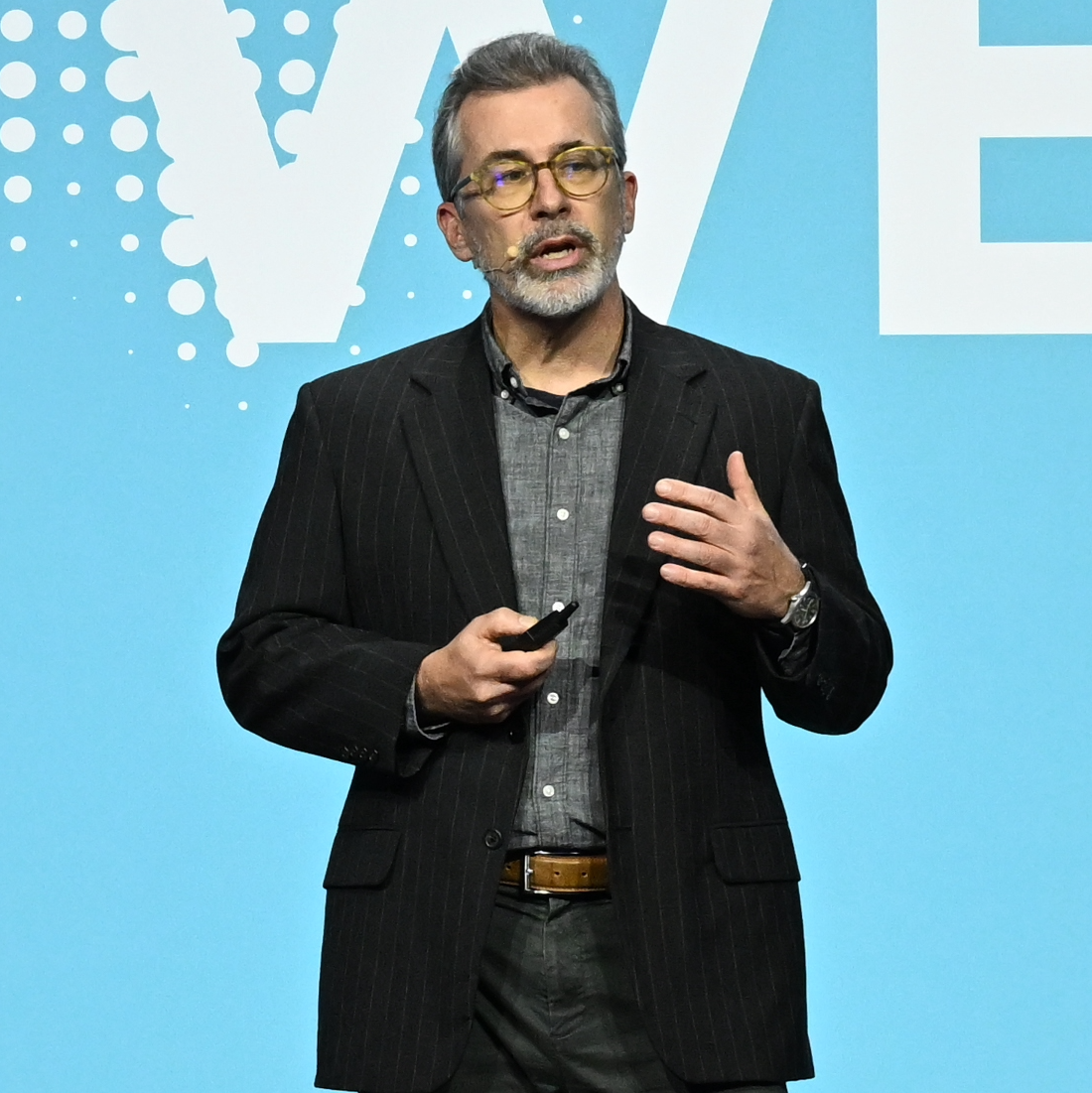
Michael Erard
Funding advisor, Faculty of Law, Maastricht University; affiliated researcher, Centre for Language Studies, Radboud University
Previously: Senior Researcher at FrameWorks Institute
Author of Bye Bye I Love You: The Story of Our First and Last Words
Article Highlights: "How the Appetite for Emojis Complicates the Effort to Standardize the World's Alphabets at the New York Times and "How to Build a Metaphor to Change People's Minds" at Aeon
Q&A
You've just collected a career's worth of public scholarship in The Language Beat — and included six of your pitches. what gets a piece accepted?
Among the many variables, I’d say the ones that get published are the ones I could write most quickly, because the idea came (mostly) fully formed. I could formulate the question, point in the direction of what I thought the answer is, and articulate why it mattered. Bang. Sometimes a lot of pre-writing goes into that, and some initial research forays. It’s important to remember that the pitch isn’t meant to be a stage for your thinking. It’s sales.
For busy experts it can feel impossible to find time for op-eds and essays. what are your secrets for making sure public writing happens?
Keep a notebook or send yourself emails to keep track of topics or good lines. Touch the project every day. Having a conversation, sending an email, cleaning up your Scrivener files: it all counts. Learn to make small chunks of time useful and productive. Too many people put off writing until they can get a long stretch of free time which, surprise surprise, rarely happens. It also helps to have the memory of a guppy when it comes to what you’ve achieved. I’m forever thinking that I haven’t done anything yet — you’re only as good as what’s currently out there.
Bye Bye I Love You lookS at the first words of babies and the last words of the dying. Tell us more about where the idea came from and how the world responded.
In my talk at End Well (a conference about dying, grief, and care), I told the story of holding my newborn son and listening to his vocalizations and anticipating the end of life and language, and also finding a body in the woods. Incidentally, speaking in that format to 700 people was a stretch goal of mine. I loved doing it, and even though I’ll forever be a writer and not a speaker, it was a real highlight of my public work.
Your NYT priming piece is central to our Transform service. you wrote it in 2012, before phone dependency. any updates?
Since I wrote that, things have become even more challenging. Our attention has gotten wrecked by the variable reward dynamics of engagement — not just on social media, but even by metrics trackers on academic articles. Now you can know minute by minute how public you are. It’s very addictive. There’s also a political economic angle. I firmly believe that if you want others to read your long-form work, you should read long-form work. It’s similar with buying books. People want their book to be a bestseller but don’t buy books themselves. Don’t be an attentional pirate, is my admonition.
Bonus: What do you wish we had asked you?
I’m not sure the question, but I couldn't sustain my writing without my wife. For our wedding anniversary, I pitched Creating Some Slack (about making a household work) to Aeon for us to write together — and they took it!

Would You Like Help with your own op-eds?
Find out more about our public scholar services
We’ve helped many successful academics reach larger audiences. Book a consultation with Anne to talk about Pitch, Engage, or any of our other public scholar support services
